Monday, 28 February 2011

Attachment Parenting Series: Babywearing

Welcome to our third installment of the Attachment Parenting Series - Babywearing! Don't forget to use the Mister Linky at the bottom to share your own babywearing information and experiences!


What is it?

Babywearing is the act of carrying a baby close to the caregiver using a cloth baby carrier. When done frequently for the first nine months after birth, it effectively doubles the infant's gestation, with the "womb" now on the outside rather than inside the mother. At that point, the infant's neurological and muscular development is at the same level as other primates' "full term" offspring.

How can we encourage it?

Babywearing is an ideal way to promote attachment between parent and child. There is a widely held misconception in our culture that a child can be held "too much", thus creating a clingy, spoiled dependency in the child. Quite the opposite holds true, however; the emotional security resulting from physical proximity and prompt nurturing allows the child to grow into a confident independence.

Benefits

Recognizing the benefits of babywearing - physical, emotional, intellectual, relational, and practical - will help to dispel this myth of "too much" nurturing.

Physically, worn babies are more regulated, receiving the benefits of a prolonged gestation. When inside the womb, the baby's systems were automatically regulated. The external womb-like environment of a sling assists the infant in re-regulating after the disruption of birth. The baby hears the parent's heartbeat, feels their breathing, and experiences the soothing rhythm of their walking and movement, all of which encourage him to regulate his own physical responses. Without this regulating presence, the baby may develop disorganized patterns of behavior, such as colicky cries, irregular breathing, and disturbed sleep.

Babywearing develops muscles in the baby that will later be used for sitting, standing, and walking. The baby's sense of balance is also heightened due to the stimulation of the vestibular system, thereby enhancing motor skills. Breastfeeding is encouraged as the baby feeds more frequently due to both the physical proximity to the mother and the ability of the mother to promptly respond to her baby's cues.

Emotionally, babies who are worn cry less and have decreased levels of stress hormones. This means the baby is happier and more relaxed. The comfort and closeness of his parent encourages a sense of calm in the baby. The baby receives immediate feedback from his parent in response to external stimuli, and is able to withdraw into the parent when overwhelmed or frightened. Babies who are forced to self-calm waste valuable energy that could otherwise have been used to grow and develop. Babies thrive on touch, and babywearing is an ideal way of meeting this need. The effects of touch are particularly pronounced in premature infants, as demonstrated by the dramatic results of kangaroo care.

Intellectually, worn babies less time crying and more time in a state of quiet alertness, observing and learning about their environment. Their proximity means that they receive more interaction, hear more conversations, and see more of the world around them. Speech development is enhanced. They become more aware of patterns of behaviour - facial expressions, body language, emotions, heart rates, breathing patterns, vocal inflections, and tones. This increased exposure and learning stimulates brain development, creating more neural connections and expanding future learning potential.

Relationally, babywearing enables the parents to experience heightened sensitivity to their baby's cues. As the parents learn to read, trust, and respond to these cues, the baby learns that his needs will be promptly attended to. The resulting emotional security and trust reinforces the baby's cues and enhances his ability to give them. This cycle of positive interaction strengthens the communication and connection between parent and child, allowing the relationship to become increasingly natural and instinctive. Closeness breeds familiarity, making babywearing an ideal bonding tool for mothers, fathers, extended family, and caregivers.

Practically, babywearing is simply convenient. Parents are able to keep the baby close and secure while going about their daily routine. They are left with two free hands to tend to other children, do housework, or prepare food. Fewer pieces of baby equipment are needed in an attempt to entertain or pacify the baby who just wants to be held. Mobility is enhanced without the need to lug heavy car seats or maneuver bulky strollers. Taking a walk while wearing the baby provides the dual benefits of cardiovascular exercise and weight training. Breastfeeding can happen on the go. The reluctant napper can be worn to sleep. This extra freedom is particularly desirable during stages of teething, sleep disruption, or separation anxiety.

Styles and uses

There are a number of different styles of baby carriers. While all can be used at any stage, each style has its own individual strengths and weaknesses. A local babywearing group or baby store will allow you to try a variety of carriers to find the one that works best for you.

A ring sling is a length of fabric that goes over one shoulder and fastens with a pair of adjustable rings. This is particularly useful for frequent up-and-downs, as it is simple to use, quick to put on and take off, and fully adjustable. Because it is a one-shouldered carrier, it is less ideal for longer periods of wearing, especially with older or heavier babies.

A pouch is a tube of fabric with a curved seam, folded in half lengthwise to create a pocket for the baby and worn over one shoulder like a sling. It can be folded quite small, making it perfect for the diaper bag. The pouch is sized to the individual wearer and must fit well in order to be comfortable. Again, because it is a one-shouldered carrier, it is better for shorter lengths of time or smaller babies.

A wrap is a long length of fabric. The fabric is wrapped around the body and tied securely in place, creating a pocket for the baby. A stretchy wrap is comfortable for newborns, while older babies require the support of a non-stretchy wrap. The most supportive of these wraps are known as German-style wovens and are specially designed for strength, breathability, diagonal stretch, and secure texture. The wrap can be worn on one or two shoulders, comes in a variety of lengths, and can be used to wear the baby on the front, back, or hip. The wrap is the most versatile, supportive, and adjustable baby carrier, but also has the steepest learning curve. The most comprehensive wrap instruction chart can be found here.

A soft-structured carrier (SSC) is a square piece of fabric with two padded shoulder straps and a padded waistband, secured in place with buckles. This subset of baby carriers would include framed backpacks and Bjorn-style carriers. The Bjorn-style carriers typically have a very narrow crotch piece which result in the baby dangling from his crotch, putting excess pressure on his spine. A more ergonomically-correct baby carrier will have a wider base which spreads the baby's hips and holds them in a seated position.

The mei tai, or Asian-style carrier, is a square piece of fabric with two shoulder straps and two waist straps. This carrier combines the adjustability of a wrap with the ease-of-use of an SSC. The child's weight is distributed between the shoulders and torso, making this, along with the wrap and SSC, a good choice for long carries.

What if it doesn't happen?

Whether for physical or personal reasons, a parent may find themselves unable or unwilling to wear their baby in this manner. A baby who is held less will require more interaction in order to gain the physical, emotional, intellectual, and relational benefits that would otherwise be provided through babywearing.

Encourage physical closeness

To help regulate the newborn and to develop the connection and responsiveness that physical closeness brings, hold or lay with the baby as often as possible. Look at books while holding the baby on your lap, take a warm bath together, and nap together. Skin-to-skin contact is particularly beneficial. Breastfeeding and co-sleeping are both ideal methods of providing this physical proximity, system regulation, and enhanced communication.

Interact verbally and make eye contact

To encourage brain development, language skills, relational abilities, and bonding, be particularly intentional about interacting verbally with the baby, including making frequent eye contact. Talk as you push her in the stroller, feed her dinner, or get her dressed. Narrate your daily life as she sits near you, watching. Read and sing to her. Naturally, all of these things are important for all babies, but for the baby who is not frequently worn, they must be particularly emphasized.

Our experiences

I credited babywearing with being my sanity-saver during my first year of parenting. We use a variety of baby carriers, each with their preferred use. Wraps were perfect for long walks; a longer wrap length provided the support I needed to carry him comfortably, while a shorter wrap length came in handy after he started walking but needed up halfway through a walk. Our ring sling was well-loved for short carries, particularly during the up-and-down toddler stage. A mei tai allowed me the confidence of a back carry when out in public.

With my oldest, I found the convenience of babywearing to be indispensable. In his early weeks, he often napped in a carrier, preferring the warmth and movement over a flat bed. It also provided him with a familiar place to nap while out of the house. When teething hit, it hit hard, and many days I would walk around the house with him tucked contentedly in a wrap and a book in my hand. During each evening's "witching hour", I would wrap him up snuggly and go for a long walk through our favourite trail. With him secure on my back, I could browse our local farmer's market without the inconvenience of a stroller. During stages when he wanted to be held more often than not, it allowed me to get housework done and food on the table while meeting his needs at the same time.

When my second son was born, I expected that babywearing would be even more useful. Instead, I had a baby who, unlike my first, was perfectly content to nap alone and for long stretches of time. Also unlike my first, he was a quick and efficient nursling, not interested in spending hours at the breast. I found that I wore him mainly outside of the house, where babywearing was still very useful in allowing me two hands free to, for example, tend to my older son at the park while keeping the baby snuggled close and warm.

As he got older, however, I found that I was spending quite a bit of time annoyed with him. I needed to cook supper and he wanted up. I had laundry to do and he wanted up. I was trying to read with his older brother and he wanted to sit on my knee and nurse. I felt like I was constantly trying to fend him off, and the more I did so, the more clingy he became.

Finally I was able to recognize and consciously acknowledge this negative cycle we had fallen into. While trying to cook supper one evening, I grabbed our long-neglected ring sling, popped him in, and carried on. He nestled silent against me and I finished preparing the meal. Instead of urging him to go play or plopping him unceremoniously on his father's knee, I spent that time inhaling his sweet smell, kissing his soft hair, and talking to him about what I was doing. It was a significant turning point in our relationship and a much needed return to connection and attachment. We haven't looked back since.

Summary

Babywearing is the most natural way to keep your baby close while tending to the demands of daily life. It provides numerous physical, emotional, intellectual, relational, and practical benefits for both parent and child. It regulates the infant, provides emotional security, encourages learning, enhances parent/child communication, and brings with it many conveniences.

There are several styles of baby carriers, each with their own strengths and weaknesses. Both use and comfort should be considered when purchasing a carrier.

When babywearing is not an option, the parent should place particular emphasis on physical closeness, verbal interaction, and eye contact. This will provide the baby with many of the benefits that would otherwise be gained through babywearing, including system regulation, brain development, language skills, responsiveness, and bonding. Ultimately, communication and connection must be encouraged in whatever form best suits the needs of the parent and child.


Recommended Reading:
The Babywearer
Babywearing International
Babywearing Information by Dr. Sears
The Vital Touch: How Intimate Contact With Your Baby Leads To Happier, Healthier Development by Sharon Heller, PhD


Now it's your turn! Add your link using the Mister Linky below to share your thoughts, experiences, resources, or struggles as they relate to babywearing. I look forward to reading them! See you next Monday for our fourth installment - Bedding close to baby!


Saturday, 26 February 2011

Weekend Reading

Thursday, 24 February 2011

Seeds of discontent

Oh, how easy it is to allow seeds of discontent to take root in my life.

Never has this been so apparent than last week after a wonderful get-together with a group of online friends. It was a perfect day - the conversation, the food, the games, the lovely group of women and children. Perfect from start to oh-so-reluctant finish.

And yet, as I was driving myself home afterwards, I found myself thinking, so that's what a grown-up's house looks like. It was gorgeous. Everything was just so, from the art on the walls to the coffee tray on the counter to the name plaques on the children's doors to the lovely-yet-uncluttered decorations around the house.

I walked into my own home that evening and felt an overwhelming sense of discontent. Suddenly the house that I have adored for the past year looked little better than a college dorm. There is no art on our walls, just candid pictures of our families. Our furniture, far from being elegant and lovely, has come almost exclusively from Ikea. Our white futon, the only couch we own, has been stained from four years' worth of baby spit-up and spills. Our bookshelves hold Harry Potter, not Anna Karenina. Instead of acres of space for the children to explore, we have a small patch of grass in our unfenced front yard. And on and on and on.

All I could see were these glaring flaws, all the ways in which our home didn't measure up to a "real" grown-up's home.

Far too often lately I allow such moments of insecurity to take over my thoughts, to dictate my happiness and sense of contentment. What happened to enjoying and rejoicing?

I allow my self-worth to be determined by how many hits or comments my blog gets - and thereby permit the same to leave me feeling let-down, even envious. I worked so hard on that post, did no one enjoy it? Why did her post get 50 comments while mine only got one?

Or parenting - oh, parenting. I see other parents, read other blogs, and measure myself against them, invariably finding myself lacking. How does she find the energy to do such fascinating projects with her kids every day, whereas I'm doing awesome if I can just get us to the park for an hour? Where does she get her endless patience from, while I had to apologize to my kids for losing my temper again today?

Always measuring, always coming up short, always self-doubting and second-guessing. Projects and patience, blog hits and comments, elegance and possessions - I allow all of it and so much more to define my self-worth, leaving me feeling discontent. If only ___...then I would be good enough.

But what? What would be good enough? Will I ever truly get there, arrive at "good enough", if I chase this discontent? Or would it only lead to more lacking?

I know the answer. There's no use pretending it's not true. It's just so hard to admit, because admitting means having to let go. It means letting go of dissatisfaction, letting go of resentment, letting go of living with one foot in "if only", and living fully here, fully now, fully joyous and content in where I am and with what I have.

The perfectionist in my balks at that thought. But you should always strive for "better"! Don't settle for "good enough"! I'm finally beginning to see the lie of perfectionism. Oh, it was alright when what I was striving for was "the best" grades or "the best" dance or "the best" sewing project. Pushing myself further wasn't necessarily bad. But it spreads, and it brings with it immense discontent. All I have to do is re-read what I've written - what now? Now I want "the best" house? "the best" blog? "the best" projects to do with my kids?

Suddenly it's not just about pushing myself to be the best I can be, is it?

It's time to find good enough and be happy there. It's time to be truly content. This realization is just another opportunity to refocus, a reminder of our themes for this year, a chance to get back on track.

Content with where I am.

Grateful for all that I have.

Seeking beauty in all things.

Finding joy today.

Wednesday, 23 February 2011

Monday, 21 February 2011

Attachment Parenting Series: Breastfeeding

Welcome to our second installment of the Attachment Parenting Series - Breastfeeding! Don't forget to use the Mister Linky at the bottom to share your own breastfeeding information and experiences!


What is it?

Breastfeeding is the act of providing human milk to an infant or young child via the mother's breasts. In the attachment parenting sense, breastfeeding has both a physical and relational component and as such can be extended to a variety of other feeding methods.

How can we encourage it?

Breastfeeding is such a multi-faceted topic. In the name of brevity, I will be focusing on those aspects of breastfeeding that most relate to Attachment Parenting. For a more comprehensive look at breastfeeding and its many benefits and potential difficulties, I encourage you to check out the recommended reading below.

Benefits

During breastfeeding, the hormones oxytocin and prolactin are released. These hormones reduce the stress hormone cortisol and facilitate bonding between the mother and her new child. Oxytocin causes the uterus to contract, thereby assisting in expelling the placenta, controlling postpartum bleeding, and returning the uterus to its normal size. Oxytocin also causes the mother's milk to let down.

In addition to the benefits of these hormones, there are numerous other physical benefits related to breastfeeding. The breastfed baby receives complete nutrition uniquely tailored to him or her. The antibodies in breastmilk protect a child from many illnesses, and breastfed children have stronger immune systems and fewer allergies. Breastfed children experience a reduced risk of asthma, excema, diarrhea, Crohn's disease, respiratory infections, ear infections, childhood diabetes, childhood cancers, heart disease, multiple sclerosis, obesity, pneumonia, Vit A deficiency, future autoimmune disorders and more. They benefit from appropriate jaw, teeth, speech, and overall facial development. They also have increased cognitive and intellectual development as well as better vision.

The breastfeeding mother also experiences numerous physical benefits, including a reduced risk of breast cancer, ovarian cancer, uterine cancer, endometrial cancer, bone disease, arthritis, and more. She also experiences, in many cases, a delayed return of fertility when practicing ecological breastfeeding. There are also the benefits of convenience (always available, completely portable, and no extra supplies needed) and cost (free!) to consider.

Breastfeeding also brings significant relational benefits to the mother/child pair. The mother's body continues to provide nourishment, warmth, comfort and safety, just as it did when the baby was in the womb. A combination of physical proximity and hormones makes breastfeeding an ideal bonding moment. On difficult days, breastfeeding can allow the pair a chance to peacefully reconnect with each other. Breastfeeding will often calm and comfort an upset, hurt, or overwhelmed child, providing them with a quiet moment of solace at their mother's breast.

Breastfeeding is a mother's first foray into learning to read, trust, and respond to her child's cues. This is a central theme throughout Attachment Parenting. The infant, likewise, develops a strong emotional security as he learns to trust that his needs will be quickly and appropriately responded to. The more sensitive a mother becomes to her child's cues, the better the child becomes at giving those cues. This is the beginning of communication and connection between mother and child. As connection grows, the mother/child relationship becomes increasingly natural and instinctive. The resulting mutual trust and sensitivity is the basis of the parent/child relationship and the foundation upon which future discipline will rely. The better the mother knows her child, and the more the child trusts his or her mother, the easier discipline will be as the child grows.

Getting off to the right start

Because of these physical and relational benefits, it is important that a mother and baby have the best start possible with breastfeeding. This begins with education - knowing beforehand the many benefits of breastfeeding as well as the potential difficulties and how to overcome them.

Gentle birth choices increase the odds of a successful breastfeeding relationship. Once the infant is born, it is ideal that he or she have immediate access to the mother's breast. In addition to the physical benefits to the baby and to the breastfeeding relationship as a whole, this bonding opportunity will give the attachment relationship a strong start. Medical interference disrupts this period of strongest bonding instinct and can impair the infant's rooting reflex.

Frequent feedings over the next 2-5 days will provide the infant with nutrient-dense colostrum and will help the mother's milk to come in. To protect the breastfeeding relationship, ensure that no artificial nipples, pacifiers, sugar water or formula are given to the baby. It is important to ensure a good latch right from the beginning. A good lactation consultant or La Leche League leader can assist in troubleshooting any breastfeeding difficulties that arise.

The next few months

Direct breastfeeding is the most natural and beneficial way to feed a baby (alternatives will be discussed below). To protect the breastfeeding relationship, avoid the use of bottles or pacifiers in the early weeks, as this can lead to nipple confusion, flow preference, and lazy suckling. There is no need to use a bottle so that the father can have an opportunity to feed the child; he will have many other opportunities to bond with his new son or daughter in a way that does not threaten the breastfeeding relationship.

Because the frequency and duration of breastfeeding affects the mother's milk supply, the baby should be fed on cue rather than on a predetermined schedule and should be allowed to suckle for as long as he or she desires. This will ensure that the mother's milk supply is well established in the early weeks and that extra milk is produced during growth spurts. Put aside any notion that feeding on cue will result in a spoiled child. A child whose needs are met now will grow to become emotionally secure, empathetic, and independent, while a child who is pushed into early independence is likely to become needy and clingy instead.

Recognize the signs of hunger - rooting, sticking out tongue, opening and closing mouth, sucking on fist - and offer the breast before before the baby cries. Crying is a very late sign of hunger. Waiting until the baby reaches that stage before breastfeeding him will result in a tired, upset baby who is likely to nurse poorly and fall asleep before receiving a full feeding.

It is, however, to be expected that a baby will fall asleep after a feeding. During breastfeeding, both mother and child release hormones that help them sleep. These hormones, combined with a full stomach and the comfort of his mother's closeness, make it natural for a baby to sleep after eating. This is contrary to much of the popular advice given by "parenting experts", such as the "Eat - Wake - Sleep" cycle laid out by Gary Ezzo in his book Babywise, or the similar EASY cycle - "Eat - Activity - Sleep - You" - recommended by Tracy Hogg in her book The Baby Whisperer. (More about baby trainers later on in the Attachment Parenting Series.) Such a cycle is entirely counter-intuitive and works against the natural sleep-inducing properties of breastfeeding.

The first days or weeks may be painful. Determine ahead of time to work through those early difficulties; a goal of six weeks should get you over the hump and into the far easier and more natural months ahead. Your local La Leche League chapter can be an invaluable support for you during this time. Breastfeeding is not always enjoyable. Sometimes it's painful, sometimes it's boring, and sometimes it's downright annoying. Persevere! Be committed to breastfeeding for all the good it can do for you and your child. This is one of a mother's first opportunities to choose the best for her child even when it is inconvenient to her.

Don't be afraid to nurse your baby wherever you need to. There is no need to hide at home, in the car, or in a back room while breastfeeding. The reason breastfeeding makes people uncomfortable is because they don’t see it enough! Use a blanket if it makes you feel more comfortable, but be aware that doing so is likely to bring more attention to what you are doing. Being confident and matter-of-fact about breastfeeding your baby in public will go a long way in deterring any negative comments.

During the first six months, the baby should be fed exclusively with breastmilk. After six months, solids may be introduced if the child is showing signs of readiness. There is no rush, however, as a delayed introduction of solids has many benefits. As with breastfeeding, know your individual child and follow their cues to know when and how much solids to offer. A baby-led self-feeding approach is ideal. Solids should be considered part of a child's play and experimentation at this age, with breastmilk being the primary source of nutrition throughout the baby's first year.

Extended breastfeeding

Over time, breastfeeding becomes less about nutrition and more about meeting a young child's emotional needs. There is no need to wean a child once they hit the one year mark. Extended breastfeeding (breastfeeding beyond one year) provides numerous physical, emotional, and relational benefits.

The World Health Organization recommends breastfeeding for at least the first two years of life. The American Academy of Pediatrics recommends breastfeeding for at least the first one year of life, and states that "there is no upper limit to the duration of breastfeeding and no evidence of psychologic or developmental harm from breastfeeding into the third year of life or longer." The American Academy of Family Physicians notes that children weaned before two years of age are at an increased risk of illness. The average age of weaning worldwide is four years.

Breastfeeding is a loving way to meet the needs of toddlers and young children. It provides respite when overwhelmed, comfort when frustrated or hurt, nutrition when sick, and reconnection for the young child who is now beginning greater exploration of his world apart from his mother. The closeness and availability of the mother through breastfeeding provides security and reassurance, allowing them to grow and mature emotionally. Extended breastfeeding provides a gradual transition from babyhood into childhood.

It is important for the sake of the breastfeeding relationship that nursing manners be introduced and gently enforced early on. Babies can be redirected to a nursing necklace or small toy to discourage excessive twiddling, pinching, or scratching. Toddlers should be expected to ask politely to nurse, using either a word or a sign. Older toddlers may be redirected to a snack or activity, as the need may be, if the mother is unable or unwilling to nurse at that moment.

Gentle weaning

It is extremely rare for a child to self-wean before one year of age. A temporary nursing strike may occur as the older baby becomes more aware of and distracted by his environment. This lack of interest in nursing should not be misinterpreted as weaning. Continue to offer the breast, preferably in a quiet location, and in time the child's interest will return and breastfeeding can resume as normal, with all its many benefits.

Weaning will happen eventually, however. For the Attachment Parent, this may happen in one of two ways:
  • Child-led weaning: This occurs when the child self-weans, typically between the ages of two and four, because he or she no longer needs to breastfeed either nutritionally or emotionally.
  • Gradual weaning: This occurs when the mother initiates the weaning process before the child is fully ready.

While child-led weaning is the ideal, many mothers choose to initiate the weaning process for a variety of reasons. Gradual weaning should be a slow, flexible and gentle process. The particular approach will vary depending on the individual needs and desires of the mother and child.

Partial weaning is a good first step for the mother who finds herself needing to cut back on breastfeeding. This may involve night weaning, cutting out most (or all) day feeding, transitioning to a new method of helping the child fall asleep, nursing only at set times of the day, or any other combination that allows the mother to feel able and willing to otherwise continue breastfeeding her child. Because the breastfeeding relationship as a whole will be able to carry on, the child will receive its continued nutritional and emotional benefits.

A sudden "cold-turkey" approach to weaning is almost never recommended due to the distress it will cause both to the child (emotionally) and to the mother (engorgement, clogged milk ducts, and drastic hormone changes).

What if it doesn't happen?

There are times when breastfeeding does not happen. Sometimes this is due to medical issues or insurmountable breastfeeding difficulties. Other times, the mother makes a deliberate decision not to breastfeed, for any number of reasons. Fortunately, many of the attachment-related benefits of breastfeeding can be maintained while using alternative feeding methods.

Supplemental nursing system

A supplemental nursing system (SNS) is a device that allows the infant to suckle at the breast while also receiving supplementation (either pumped breastmilk or formula) through a tube attached to the nipple. This provides many of the same benefits of breastfeeding and can encourage a mother's low milk supply to increase in hopes of eventually transitioning to full-time breastfeeding without the SNS.

Bottle-nursing

If the intent is that supplementation will be temporary, with full-time breastfeeding being the ultimate goal, consider using one of the many bottle alternatives. However, if bottle-feeding is a necessity, it can be done so in a way that supports breastfeeding (when used in conjunction with breastfeeding, such as for the working mother) or mimics breastfeeding (so as to ensure the baby's cues are being followed and the infant is consuming the ideal amount of food). These steps are outlined here.

Breastmilk alternatives

While breastmilk directly from the breast is the ideal, pumped breastmilk from the mother should be the second choice. Donated milk from a milk bank should be explored third, with formula being the next alternative in line.

Skin-to-skin contact

An exclusively breastfed baby receives skin-to-skin contact with each feeding. In the absence of breastfeeding, skin-to-skin contact should be encouraged as much as possible.

Our experiences

My nursing relationship with my older son was an ever-evolving one. It began smoothly, with him latching on as soon as he was placed on my chest, and yet was not without pain - I had my husband running for the hospital gift store to pick up a tube of lanolin by the end of the first day. As the days went on, the pain lessened and I was able to relax into a each quiet session of nursing and bonding.

The next 18 months were filled with highs and lows - the joys of nursing a silly baby combined with the frustrations of wet shirts and long nights. At 18 months, desiring a second child and frustrated by a continued breastfeeding-induced lack of fertility, I began to place limits on his feedings for fear that resentment would adversely affect our breastfeeding relationship.

Shortly before his second birthday, we found we were expecting our second child. I continued to breastfeed, grateful for each week that my milk supply remained unaffected. As my sensitivity to nursing grew along with my stomach, I nightweaned him, which he accepted with relative ease. In this way, he went from three nursing sessions a day plus nightwakings, to only one nursing session at bedtime. He was a little over two years old at this point.

Eventually my milk supply disappeared and the pain while nursing increased. I began to shorten the length of time for which I would nurse him at bedtime, replacing that nighttime routine with other methods of comfort. By the time he was two and a half, he nursed for only a minute or less at bedtime. Then it was mere seconds. Then it was less than a second - not even a real latch on. I joked to my husband that he was just "kissing them goodnight" by that point. One night, instead of wanting milk, he asked to lay on them, leaning against my bare chest for a short while before climbing in bed. Then...nothing. He was truly and officially weaned.

Our second son was born soon after. He, too, had a smooth start to breastfeeding, and I enjoyed the lack of pain this second time around.

With my younger son, I find I have a less romantic and more practical view of breastfeeding. He needs to be fed, and I've got just the tools for the job. And yet on difficult days, when my nursling and I find ourselves feeding off each other's grumpiness, nursing allows us to take a break and quietly snuggle and reconnect, walking away a few minutes later in much better spirits. We've recently passed the one year mark and are now fully entrenched in the typical early-toddler stage of increased nursing. I expect that his eventual weaning will be much the same as his older brother's, with partial weaning initiated by me and ultimate weaning left up to him.

Summary

Breastfeeding is the most normative way of feeding a baby. It has numerous physical, emotional, and relational benefits for both the mother and child. It is a mother's first foray into learning to read, trust, and respond to her child's cues. As the mother and child learn to communicate through the giving and receiving of these cues, a strong connection grows between them. This connection and its resulting mutual trust and sensitivity will form the basis of the parent/child relationship and become the foundation upon which future discipline will rely.

It is important that the breastfeeding relationship get off to a good start. This can be accomplished through education, preparation, gentle birth choices, immediate postpartum bonding, and frequent nursing sessions. The baby should be fed on cue to ensure the mother builds a sufficient and well-established milk supply. Persevering through any early breastfeeding pain and difficulties will more often than not be rewarded with a long and satisfying breastfeeding relationship. Breastmilk should be the primary source of nutrition throughout the baby's first year, with any introduction of solids being considered play and exploration for the child. For the sake of the breastfeeding relationship, nursing manners should not be ignored.

Extended breastfeeding provides a growing toddler and young child with security and reassurance, allowing the child to grow into an emotionally secure, empathetic, and independent individual. While a child-led approach to weaning is ideal, many mothers choose to initiate weaning before the child is fully ready. This mother-led weaning should be gradual, gentle, and flexible. A good beginning may be partial weaning, in which some feedings are eliminated in order to allow the breastfeeding relationship as a whole to continue.

When direct breastfeeding is not an option, alternative feeding methods can be explored which support the attachment-related benefits of breastfeeding. These methods will depend on the particular circumstances, but may include the use of bottle alternatives, breastmilk alternatives, and/or bottle-nursing. Skin-to-skin contact is important in all cases. Regardless of the feeding method chosen, a mother must become adept at reading, trusting, and responding to her child's cues.


Recommended Reading:
Kellymom.com
Breastfeeding Information by Dr. Sears
So That's What They're For! by Janet Tamaro
The Womanly Art of Breastfeeding by Diane Wiessinger


Now it's your turn! Add your link using the Mister Linky below to share your thoughts, experiences, resources, or struggles as they relate to breastfeeding. I look forward to reading them! See you next Monday for our third installment - Babywearing!


Sunday, 20 February 2011

Perfect

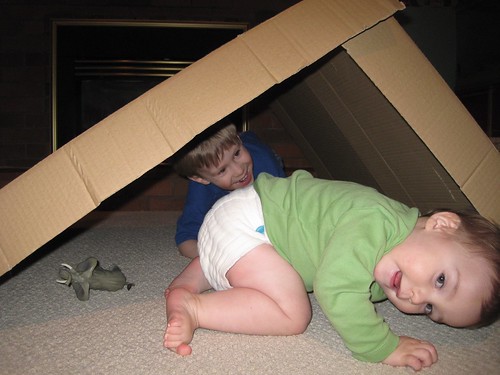
I'm sitting here working on tomorrow's breastfeeding article while the baby naps beside me. I can hear my older boy in the living room alternating between playing cars with his daddy and adding more to the fort he built yesterday for his baby "bruzzer". I have a nice cold iced cappuccino - so bad for me, so full of garbage, so very against my every food philosophy, and so very very good.

The baby will wake up soon and crawl into my lap to nurse. (This is far preferable to the way he wakes me up in the morning, when he grabs my travel-size alarm clock off the headboard, shoves it into my hand, and pulls my eyelid open with his finger. I wish I was joking, but I'm not.) For now, I'm just enjoying the quiet as I watch him sleep - his long eyelashes, his barely-open mouth, his little twitches, his tiny fingers, the tightly-swaddled blanket that he brought to me when he was ready for his nap.

This moment is perfect.

Saturday, 19 February 2011

Weekend Reading