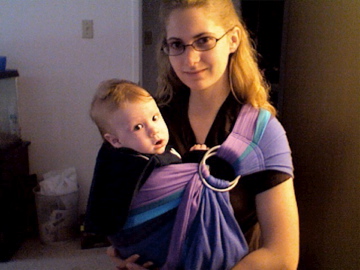
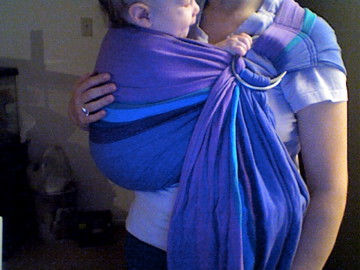
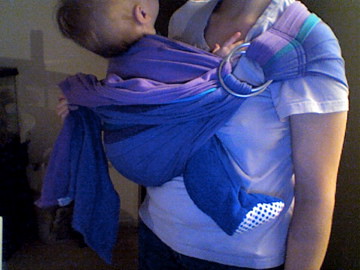
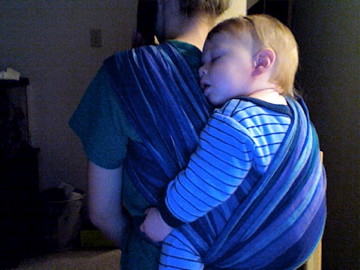
Today in our Attachment Parenting Series, we will be discussing Attachment Parenting from a Christian perspective. If you have written a post on faith as it relates to Attachment Parenting, please do share it with us in the comments below!
Introduction
We are our children's first picture of God. It is of utmost importance that the picture we give them is as accurate as our human selves can offer. This requires that we ourselves first have a holistic understanding of God’s character.
When reading Scripture, it is helpful to take note of the many descriptions of God’s character. These descriptions tell us how God interacts with His children, and we can use them as a model as we raise our own children in love and grace. While the details will be different for each family, an exploration of God’s character reveals a strong congruence with the underlying values of Attachment Parenting.
Three Truths
There are three distinct areas that support a relational, attachment-based style of parenting: God’s character, God’s design, and Christian instruction. We will explore each and its relation to Attachment Parenting below.
God’s character
God answers our cries (Jonah 2:2), draws us with loving-kindness (Jeremiah 31:3), and is slow to anger and rich in love (Psalm 145:8). He comforts us “as a mother comforts her child” (Isaiah 66:13) and has compassion on us “as a father has compassion on his children” (Psalm 103:13). His kindness leads us towards repentance (Romans 2:4).
We discover more of God’s character in the parable Jesus tells about the prodigal son (Luke 15:11-32). After the younger son squanders his wealth on wild living and prostitutes, he returns to his father, hungry and ashamed. Rather than chastise him, his father was filled with compassion for him. He ran to his son, threw his arms around him, kissed him, and called to the servants to prepare a celebratory feast.
The more we understand God’s character, the better we can present that picture of God to our children through our words and actions. We build their perception of God as we answer their cries, treat them with kindness, withhold our anger, lavish them with love, comfort them, have compassion on them, and celebrate them as a unique creation of God.
Attachment Parenting encourages this responsive, wooing, relationship-based approach to raising our children.
God’s design
God created our babies, their cues, and our instinctive response to those cues. He gave us the hormones that facilitate
bonding, the ability to nourish our babies through
breastfeeding, and the means to naturally space our children through
lactation induced amenorrhea.
By design, babies
cry to signal their needs, and their mothers respond to that cry both physically (as their milk lets down) and psychologically (by wanting to pick up and comfort or nurse the child). Our babies feel safest when
sleeping near their mothers, and mothers as well often sleep easier when their children are nearby. Babies thrive on
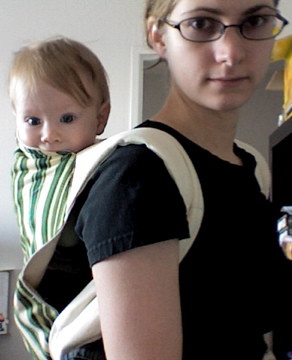
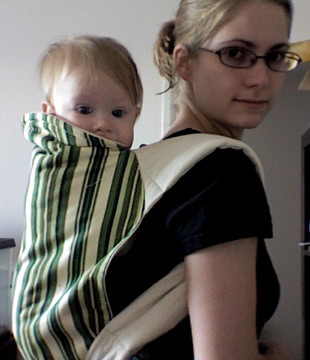
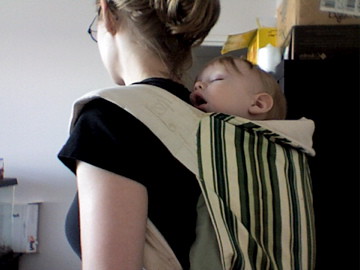
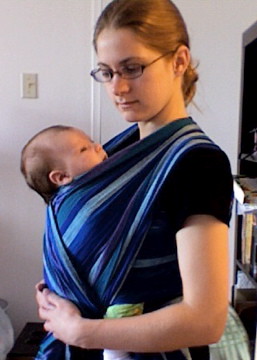
touch, and a high-touch attachment relationship offers physiological and psychological benefits to both parent and child.
Breastfeeding imagery is used extensively in Scripture (see, for example, Isaiah 60:16, Isaiah 66:11, and Psalm 22:9). There is perhaps no place that should be more encouraging of this natural, God-designed practice than the church, and yet too often it is those within the church who hide nursing mothers in back rooms, holding fast instead to a misguided and misdirected notion of modesty. Breastfeeding is a mother's first foray into learning to read, trust, and respond to her child's cues. The infant, likewise, develops a strong emotional security as he learns to trust that his needs will be quickly and appropriately responded to. The more sensitive a mother becomes to her child's cues, the better the child becomes at giving those cues. This is the beginning of communication and connection between mother and child.
As connection grows, the mother/child relationship becomes increasingly natural and instinctive. The resulting mutual trust and sensitivity is the basis of the parent/child relationship and the foundation upon which future discipline will rely. The better the mother knows her child, and the more the child trusts his or her mother, the easier discipline will be as the child grows.
Each of the AP tools serves to strengthen that foundation, which will be built on with each passing year.
(More about this in the next installment of the Attachment Parenting series, "Attachment Parenting: Beyond the baby years".) Not every family will use every tool or use them in the same way.
It is the heart behind the tool – the desire to respond sensitively to our children’s needs and to seek ways to build and strengthen a mutually-trusting parent/child relationship – that is of true importance.
Christian instruction
Scripture offers many instructions for Christians on how to practically live out the commands to love God and to love our neighbour as ourselves. None of these instructions exclude children.
The Bible instructs us to comfort those who mourn, to feed those who are hungry, and to love the unlovely. We are instructed to be compassionate, to sacrifice, and to extend mercy to others. We are exhorted to be gentle and kind, building others up through our encouraging words. When we are walking in the Spirit and practically living out our faith, our lives will begin to bear the fruit of the Spirit: love, joy, peace, patience, kindness, goodness, faithfulness, gentleness, and self-control.
We circumvent the work of the Spirit when we accept a quick parenting fix in place of the sacrificial hard work involved in relational parenting, with its goal of heart-level change. This sort of convenience parenting – such as leaving an infant to cry alone, spanking a child, or yelling and punishing instead of guiding and teaching – serves the desires of flesh (ease, convenience, outward appearances). It may have short-term gains, but it fails to pay off in the long-term.
When we are living according to the Word, however, we will seek to apply these exhortations not only to other adults, but to our children as well. We will comfort them when they cry, feed them when they are hungry, and sacrifice sleep to meet their nighttime needs. We will be kind and gentle, speaking words of encouragement into their lives. We will guide them in grace and mercy. We will demonstrate the fruit of the Spirit to them rather than demand it from them. In all these things, whatever we do “for the least of these”, we do for Christ himself (Matthew 25:31-46).
Jesus told his disciples that “if anyone wants to be first, he must be the very last, and the servant of all.” He then took a little child and had him stand among them. Taking the child into his arms, he said to them, “Whoever welcomes one of these little children in my name welcomes me; and whoever welcomes me does not welcome me but the one who sent me.” (Mark 9:33-37). We are called to a life of loving servanthood. To deny such service to a child is to refuse Christ himself.
God is love (1 John 4:8). Paul describes love in his first letter to the Corinthians:
“Love is patient, love is kind. It does not envy, it does not boast, it is not proud. It does not dishonor others, it is not self-seeking, it is not easily angered, it keeps no record of wrongs. Love does not delight in evil but rejoices with the truth. It always protects, always trusts, always hopes, always perseveres. Love never fails.”
Patience. Kindness. Humility. Slow to anger and quick to forgive. Protective and persevering. These must be the hallmarks of our love as demonstrated to our children.
Attachment Parenting provides a holistic approach to demonstrating this love in the context of a healthy parent/child relationship.
Three Heresies
There are three heresies that have worked their way into much of the church, all of which serve to draw us away from a natural, instinctive approach to raising our children. These beliefs encourage a harsh, rule-based approach instead, often starting with newborn babies.
Our children must be punished for their sins
Jesus died for the sins of all, breaking death’s hold on us and opening the way for our restored relationship with God. To say that further punishment is required is to negate the message of the Gospel, and yet many of the big Christian authors will tell you that your child’s salvation depends on you punishing them. Punishment is considered the method of paying for their sin and removing the child’s guilt.
This is completely contrary to the message of the Gospel, which says that all of our sins have already been put to death by Christ on the cross. Punishing our child again takes away from that message. It says that what Christ has already done was not enough.
The idea that any parenting method can save a child is likewise contrary to the Gospel. Only the Holy Spirit can draw our children to Christ. Only Christ can save our children through faith. This faith is a gift of God, lest any man (or parent) should boast.
Moreover, punishment is often unrealistic, as we begin to demand more from our children than we expect from ourselves. We talk of God’s mercy, grace, patience, and kindness when speaking of ourselves; should we then demand perfect obedience from our children and punish them when they fail to achieve it? Our debt has been paid through Christ. We must be cautious, then, not turn around and demand payment from our children for their wrongdoings, lest we become as the
unmerciful servant of which we were warned.
God punishes His children when they sin
Rather than saving them, punishment presents a distorted view of God to our children. God raises His children with grace and mercy, not punishment. In His love, He does allow us to experience the natural consequences of our actions, but He does not punish us or send us away from Him. Likewise, Jesus did not punish His disciples, but rather patiently taught them and guided them toward a fuller understanding of God.
The idea that God punishes His children is contrary to His grace. It further serves to negate the Gospel, suggesting that further punishment is needed on top of what Christ has already accomplished on the cross. We feel pain when we sin because we are walking apart from God and from His best for our lives. This pain is self-inflicted as we choose separation from His loving guidance. When we repent and turn back to God, He forgives us without first demanding repayment or inflicting punishment. We are called to offer this same generous forgiveness to those around us - including our children.
God is Love. God is good and merciful, the same then, now, and forevermore. It is a flawed understanding of His character that leads to delineation between the “wrathful” God of the Old Testament and the “merciful” God of the New Testament.
Some argue that God punishes His enemies, those who are evil and unrepentant.
Our children are not our enemies and their childish antics are not evil. Even if that were not the case, we are instructed not to take revenge, nor to repay evil for evil, for the Lord is judge and it is His to avenge.
Rules and good behaviour produce Godly people
A strict focus on rules and behaviour suggests that what matters is our outward behaviour. Scripture tells us, however, that God looks at the heart. This misplaced focus also suggests that rules can keep us in line, and yet the Law proved otherwise – and “grace increased all the more” (Romans 5:20).
There often seems within the Christian community to be a hyper-focus on verses intended for others. In this case, many parents quote Ephesians 6:1 (“Children, obey your parents in the Lord, for this is right”), and yet ignore the verse directed towards parents that follows (“Fathers, do not exasperate your children; instead, bring them up in the training and discipline of the Lord.”). It is not our place to make our children obey us; that verse contains an instruction for them, not for us. Rather, it is our duty to “bring them up in the training and discipline of the Lord”.
Indeed, we
cannot make our children obey us. We can make them comply with our instructions, but true obedience comes from the heart. That sort of obedience can never be demanded from anyone. It arises from a relationship of love and trust. As parents who wish to assist our children in fulfilling that command, we must tenderly cultivate a mutually loving and trusting relationship with them, in order that out of that they may respond to us in true heartfelt obedience.
A proper understanding of child development enables parents to respond to their children in a helpful and understanding way. It allows parents to put aside the false notion that babies cry to manipulate rather than communicate, or that their child’s immature behaviours are sinful rather than normal (and ultimately healthy) developmental stages. With a solid understanding of age-expected behaviours in place, parents are able to actively and respectfully move their children from inappropriate behaviours to appropriate ones, guiding them towards what they
should do rather than focusing on what they
shouldn’t do.
There is no fear in love (1 John 4:18). You cannot beat a child into salvation. A child is not saved through a parent punishing him in order to "atone for his sin". A child is not saved by "being good". A child is saved through a relationship with Jesus Christ - nothing more, nothing less - and anything that suggests otherwise is outright heresy.
Summary
A child’s deepest understanding of God will be formed through their relationship with their parents. In order to ensure we model an accurate picture of God, we must first understand God’s character, design, and instructions for living.
God’s character is one of kindness, compassion, and love. God’s design encourages nearness and responsiveness. Christian instruction points us towards the sort of sacrificial love that leads to the fruit of the Spirit being evident in our lives.
Each of these three areas speaks to the heart of Attachment Parenting. Far more than merely the decision to breastfeed or co-sleep, Attachment Parenting encourages a responsive, relationship-based approach to raising our children. This is what an examination of Scripture calls us to, that we woo our children with kindness, guide them with gentleness, and respond sensitively to their needs. Attachment Parenting provides a holistic approach to demonstrating God’s love and grace to our children in the context of a healthy parent/child relationship.
There are three lies that serve to pull us away from this responsive, relational, instinctive style of parenting. First is the belief that our children must be punished for their wrongdoings. Similarly, next is the belief that God punishes His children for their sins. Last is the belief that rules and good behaviour produce Godly children. Each of these beliefs is contrary to the message of the Gospel, and each serves to suggest that what Christ accomplished on the cross was either insufficient or unnecessary for our salvation and the salvation of our children.
The wages of sin is death, separation from God. It was the sacrifice of Jesus that allowed restoration and reconciliation, opening the way to eternal life. Our children are saved through that relationship, not through punishment, good behaviour, or fear. God loves you, and He loves our children. We must be careful to treat them at all times as cherished creations of a Holy God.
Not every parent will choose to use all of the AP tools, nor choose to use them in the same way. It is not the specifics that are demanded of us, but rather the relational approach behind them. The more we understand God’s character, design, and instructions, the better we can determine the specifics in a way that is right for our family, with an understanding of the underlying heart and purpose:
responding sensitively to our children’s needs and seeking ways to build and strengthen a mutually-trusting relationship with them.
“But we proved to be gentle among you, as a nursing mother tenderly cares for her own children.”
1 Thessalonians 2:7
Recommended Reading:
Parenting Freedom
Gentle Christian Mothers
The Mission of Motherhood by Sally Clarkson
The Complete Book of Christian Parenting and Child Care by William Sears, M.D. and Martha Sears, R.N.